
Car at the Best Price
honda to hyundai and suzuki to bwm all cars are available here
sushanta
·Updated ·23 min read

Car at the Best Price

Drive More. Pay Less. Choose CarBhartics.
Get your dream car at the best possible price with CarBhartics. We help you compare deals, negotiate better prices, maximize your exchange value, and make the car-buying process simple and transparent.
Whether you are buying a new car or exchanging your existing vehicle, our goal is simple — help you save more and buy smarter.
🚗 Best Car Deals 💰 Competitive Pricing & Exclusive Offers 🔄 Better Exchange Value ⚡ Faster Delivery Assistance 🤝 Expert Car-Buying Support
Why pay more when you can buy smarter?
Visit CarBhartics.com and discover the right car at the right price.
Your Complete Guide to Buying the Right Car at the Right Price
Buying a car is one of the biggest financial decisions most people make. Whether you are purchasing your first car, upgrading from an existing vehicle, replacing an old family car, or moving to an electric vehicle, one question is almost always at the center of the decision:
How can I get the best car at the best price?
The answer is not always as simple as finding the lowest advertised price. A genuinely good car deal involves much more than the showroom price. It includes the ex-showroom price, discounts, insurance, registration charges, taxes, financing costs, exchange value, accessories, delivery charges, maintenance expectations, resale value, and the overall ownership experience.
At CarBhartics, the objective is simple: help customers make a smarter car-buying decision and get the best possible value from their purchase.
Whether you are looking for a hatchback, sedan, SUV, MPV, premium car, or electric vehicle, understanding how car pricing works can help you avoid unnecessary expenses and negotiate with greater confidence.
What Does “Car at the Best Price” Really Mean?
When people search for a car at the best price, they often think about getting the biggest discount from a dealer.
However, the lowest discount does not necessarily mean the lowest final cost.
For example, suppose two dealerships offer the same car.
Dealer A offers a ₹1,00,000 discount but charges higher insurance and adds expensive accessories.
Dealer B offers a ₹70,000 discount but provides better insurance pricing and a stronger exchange value.
At first glance, Dealer A appears cheaper. But after calculating the complete transaction, Dealer B could actually be the better deal.
This is why the best car price should be evaluated using the final amount you actually pay, rather than simply looking at the advertised discount.
A smart car buyer should compare:
- Ex-showroom price
- Dealer discount
- Manufacturer offer
- Exchange bonus
- Loyalty benefits
- Corporate offers
- Insurance
- Registration and road tax
- TCS, where applicable
- Accessories
- Extended warranty
- Service packages
- Finance charges
- Exchange value
- Final on-road price
The objective is not merely to buy a car cheaply.
The objective is to maximize value while minimizing the total cost of ownership.
Why Finding the Best Car Price Can Be Difficult
The Indian automobile market offers thousands of variants, multiple manufacturers, hundreds of dealerships, financing options, insurance providers, exchange programs, and promotional schemes.
Prices can also vary depending on:
- Location
- Variant
- Model year
- Stock availability
- Dealer inventory
- Manufacturer campaigns
- Festival offers
- Exchange offers
- Finance offers
- Customer eligibility
- Insurance selection
- Accessories
- Delivery timeline
Two customers buying the same model in the same city may sometimes receive different offers.
This is one reason why car buyers should not simply accept the first quotation they receive.
A quotation is a starting point for comparison—not necessarily the final price.
Understanding the Different Components of a Car Price
Before negotiating, it is important to understand how a car's final price is calculated.
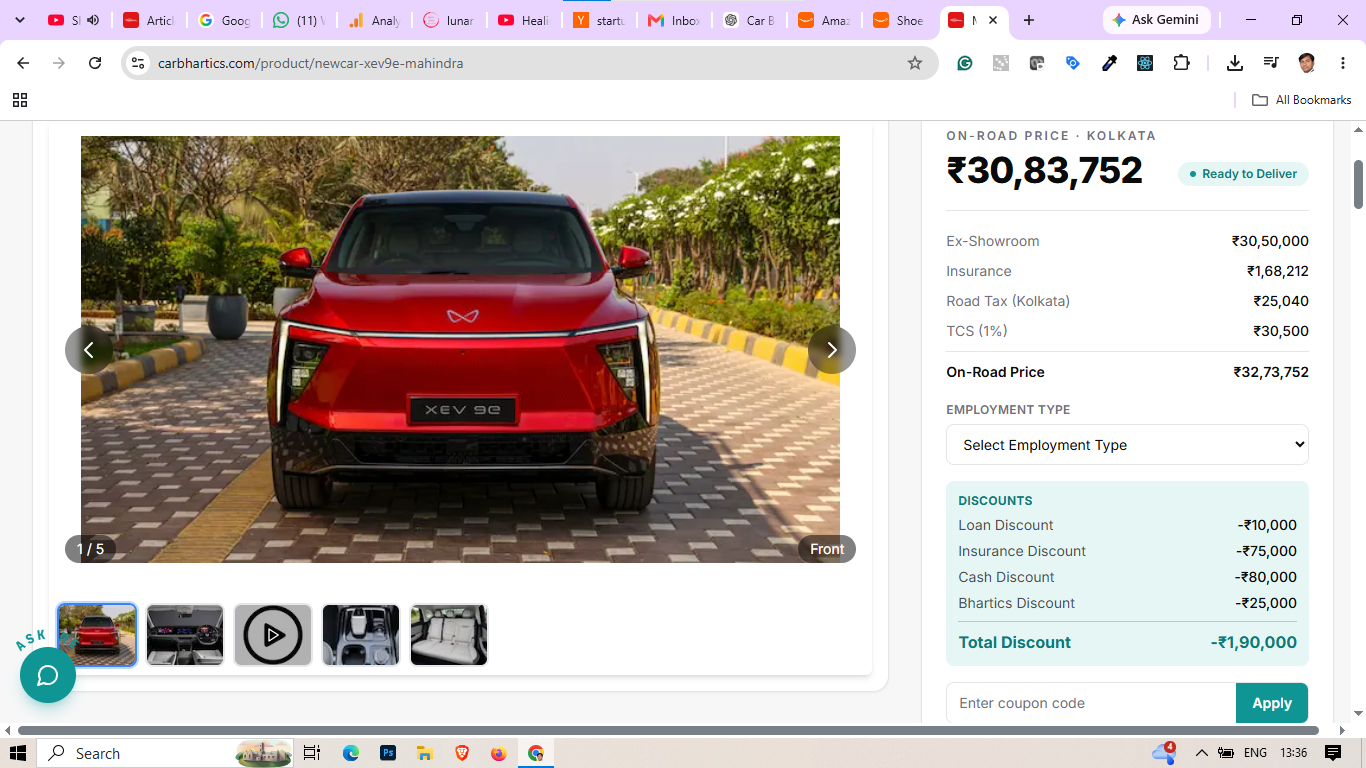
1. Ex-Showroom Price
The ex-showroom price is the manufacturer's listed price for the vehicle before adding registration, insurance, and other applicable charges.
This price generally includes applicable GST and is the starting point for calculating the on-road price.
However, the ex-showroom price is not the amount you ultimately pay to put the vehicle on the road.
2. Insurance
Insurance is another significant component of the on-road price.
Dealerships frequently offer insurance packages, but buyers should compare the coverage and premium with alternatives.
Important factors include:
- IDV
- Zero depreciation cover
- Engine protection
- Roadside assistance
- Consumables cover
- Return-to-invoice cover
- Deductibles
- Network garages
- Claim support
The cheapest insurance policy is not necessarily the best insurance policy.
At the same time, customers should avoid paying significantly more simply because insurance is bundled into the dealership quotation.
3. Road Tax and Registration
Registration charges vary depending on the state and vehicle.
In West Bengal, for example, applicable registration and road-tax charges contribute significantly to the final on-road price.
A buyer comparing prices across cities should therefore remember that the same vehicle may have different on-road prices in different states.
4. TCS
Tax Collected at Source may apply depending on the applicable vehicle price and prevailing tax rules.
Buyers should check the current applicable rules and ensure that any TCS amount shown in their quotation is correctly calculated.
Currently, the Indian government charges 1% as TCS on cars with an ex-showroom price above 10 lakh.
5. Accessories
Accessories can increase the final purchase price considerably.
Some accessories may be useful, while others may be optional.
Before agreeing to an accessories package, ask:
Do I really need this accessory, and can I buy it elsewhere at a better price?
Never assume that every accessory included in a quotation is mandatory.
The Difference Between Discount and Final Price
One of the biggest mistakes car buyers make is focusing exclusively on discounts.
A dealer may advertise:
“₹1 lakh discount!”
That sounds attractive.
But the customer should immediately ask:
“What is my final on-road price after everything?”
This question changes the conversation from marketing claims to actual numbers.
A good quotation should clearly show:
**Ex-showroom price − Manufacturer discount − Dealer discount − Exchange bonus − Other eligible benefits
- Insurance
- Registration
- Taxes
- Optional items = Final payable amount**
This is the figure that matters.
How to Get the Best Price for a New Car
Getting a strong deal requires preparation.
Here are some practical steps.
Step 1: Research the Model
Before contacting dealerships, understand:
- Model
- Variant
- Engine
- Transmission
- Fuel type
- Key features
- Safety features
- Approximate ex-showroom price
- Approximate on-road price
- Available offers
This gives you a basic understanding of the vehicle.
Step 2: Decide Your Exact Variant
Do not negotiate without knowing which variant you want.
A dealership may redirect you toward another variant because it has more inventory or a higher margin.
If you know your preferred variant, you can compare quotations accurately.
Step 3: Compare Multiple Quotations
Do not rely on one dealer.
Request quotations from multiple dealerships.
Ask each dealership for the complete on-road price.
Compare each line item.
This can reveal significant differences.
Step 4: Negotiate the Vehicle Price
Once you know the market price, negotiate the dealer discount.
Ask whether there are:
- Dealer-level discounts
- Manufacturer schemes
- Festival offers
- Exchange bonuses
- Corporate offers
- Loyalty bonuses
- Finance offers
Not every customer will qualify for every offer, so eligibility should be confirmed before calculating the final price.
How Exchange Can Help You Get a Better Deal
If you already own a vehicle, exchanging it can be an important part of the negotiation.
Suppose your old car is worth approximately ₹5 lakh.
If one dealer offers ₹4.3 lakh and another offers ₹4.8 lakh, the difference is ₹50,000.
That difference can significantly affect your effective purchase price.
Therefore, do not negotiate only on the new car.
Negotiate the complete transaction:
New car price + old car value = actual deal
A strong exchange value can sometimes be more valuable than a slightly larger discount on the new vehicle.
How to Get the Best Exchange Value
Before taking your old vehicle to a dealer, research its market value.
Factors affecting valuation include:
- Model
- Variant
- Manufacturing year
- Registration year
- Mileage
- Number of owners
- Accident history
- Service history
- Tyres
- Exterior condition
- Interior condition
- Insurance
- RC status
- Demand for the model
Maintaining proper service records can also help demonstrate that the vehicle has been properly maintained.
Get more than one valuation if possible.
Why the Best Price Is Not Always the Lowest Price
Imagine two cars:
Car A: ₹10 lakh Car B: ₹10.5 lakh
Car B may have:
- Better safety equipment
- Better resale value
- Lower maintenance
- Better fuel efficiency
- More features
- Better warranty
- Stronger reliability
If Car B costs less to own over five years, it could provide better overall value despite having a higher purchase price.
This is why CarBhartics focuses on helping customers look beyond the headline price.
The right question is:
“Which car gives me the best overall value for my money?”
Best Price vs Best Value
These are two different concepts.
Best Price
The lowest amount you can pay to purchase the vehicle.
Best Value
The combination of:
- Purchase price
- Features
- Safety
- Reliability
- Running cost
- Maintenance
- Warranty
- Resale value
- Ownership experience
A smart buyer considers both.
How CarBhartics Can Help You Buy Smarter
CarBhartics is designed around the idea that customers should not have to navigate the entire car-buying process alone.
The platform aims to help buyers research cars, understand pricing, compare options, and connect with appropriate purchase support.
Instead of simply asking:
“What is the price of this car?”
the better question is:
“What is the best deal I can get for this car?”
CarBhartics focuses on helping customers answer that question.
Why Transparency Matters in Car Buying
A car purchase involves a substantial amount of money.
Customers should understand exactly what they are paying for.
A transparent quotation should separate:
- Vehicle price
- Discount
- Insurance
- Registration
- Taxes
- Accessories
- Other applicable charges
If a customer does not understand a charge, they should ask for an explanation before making payment.
Transparency helps create confidence and reduces unpleasant surprises at the time of delivery.
How to Negotiate With a Car Dealer
Negotiation does not need to be aggressive.
A professional approach is usually more effective.
Instead of saying:
“Give me the biggest discount.”
try:
“Please provide your best final on-road price for this exact variant, including all applicable discounts and charges.”
Once you receive the quotation, compare it with other offers.
Then ask:
“Can you improve this final price?”
This keeps the conversation focused on the actual transaction.
Ask for the Final Price in Writing
Whenever possible, ask the dealer to provide the quotation in writing.
This allows you to compare:
- Price
- Discount
- Insurance
- Registration
- Accessories
- Other charges
It also prevents misunderstandings later.
Never make an important financial decision based only on a verbal promise.
Timing Can Affect Car Prices
Car prices and offers can change depending on market conditions.
Potentially attractive periods may include:
- Festival seasons
- End of month
- End of quarter
- Financial year-end
- Model-year changeovers
- Periods of high inventory
However, buyers should not purchase a car they do not want simply because a discount is available.
A discount is valuable only if the underlying purchase makes sense.
End-of-Month Deals
Dealerships may have monthly sales objectives.
Because of this, some buyers attempt to negotiate toward the end of the month.
It can be worth asking whether there are additional applicable offers, but there is no guarantee that every dealership will provide a better price at month-end.
The best strategy is to combine timing with market research.
Model-Year and Stock Considerations
Inventory age can influence negotiations.
A vehicle manufactured earlier may sometimes attract a stronger discount than a recently manufactured vehicle, depending on inventory and manufacturer policies.
However, buyers should carefully consider:
- Manufacturing date
- Registration date
- Warranty commencement
- Insurance
- Resale implications
A discount should compensate appropriately for any relevant disadvantage.
Should You Buy a Previous Model Year?
Not necessarily.
A previous model-year vehicle can sometimes represent excellent value if the discount is substantial.
But you should compare the saving with:
- Depreciation
- Resale value
- Updated features
- New model changes
- Manufacturing date
The correct decision depends on the individual vehicle and price difference.
Choosing the Right Variant Can Save Money
Many customers automatically choose the top variant.
But the top variant may include features that they rarely use.
For example, if the mid variant provides all the features you actually need, spending significantly more for the top variant may not be necessary.
On the other hand, some premium features can be difficult or expensive to add later.
Therefore, compare variants carefully before deciding.
Don't Ignore Safety
Price should never be the only factor when buying a car.
Consider:
- Airbags
- Electronic stability control
- ABS
- Structural safety
- Crash-test performance where reliable data is available
- ADAS, where applicable
- Parking sensors/cameras
- Child-seat compatibility
A small difference in purchase price should not outweigh important safety considerations.
Petrol, Diesel, CNG or Electric?
The best-priced car also depends on how you use it.
Petrol
Petrol vehicles can be suitable for buyers who want relatively simple ownership and moderate annual running.
Diesel
Diesel can make sense for some high-mileage users, although local regulations, maintenance costs, and future resale should be considered.
CNG
CNG may offer lower running costs where fuel availability is convenient.
Electric
Electric vehicles can provide potentially lower running costs and reduced tailpipe emissions, but buyers should consider:
- Purchase price
- Charging access
- Battery warranty
- Charging time
- Real-world range
- Electricity cost
- Service availability
- Resale considerations
The cheapest purchase price does not automatically mean the lowest five-year ownership cost.
Financing and the Best Car Price
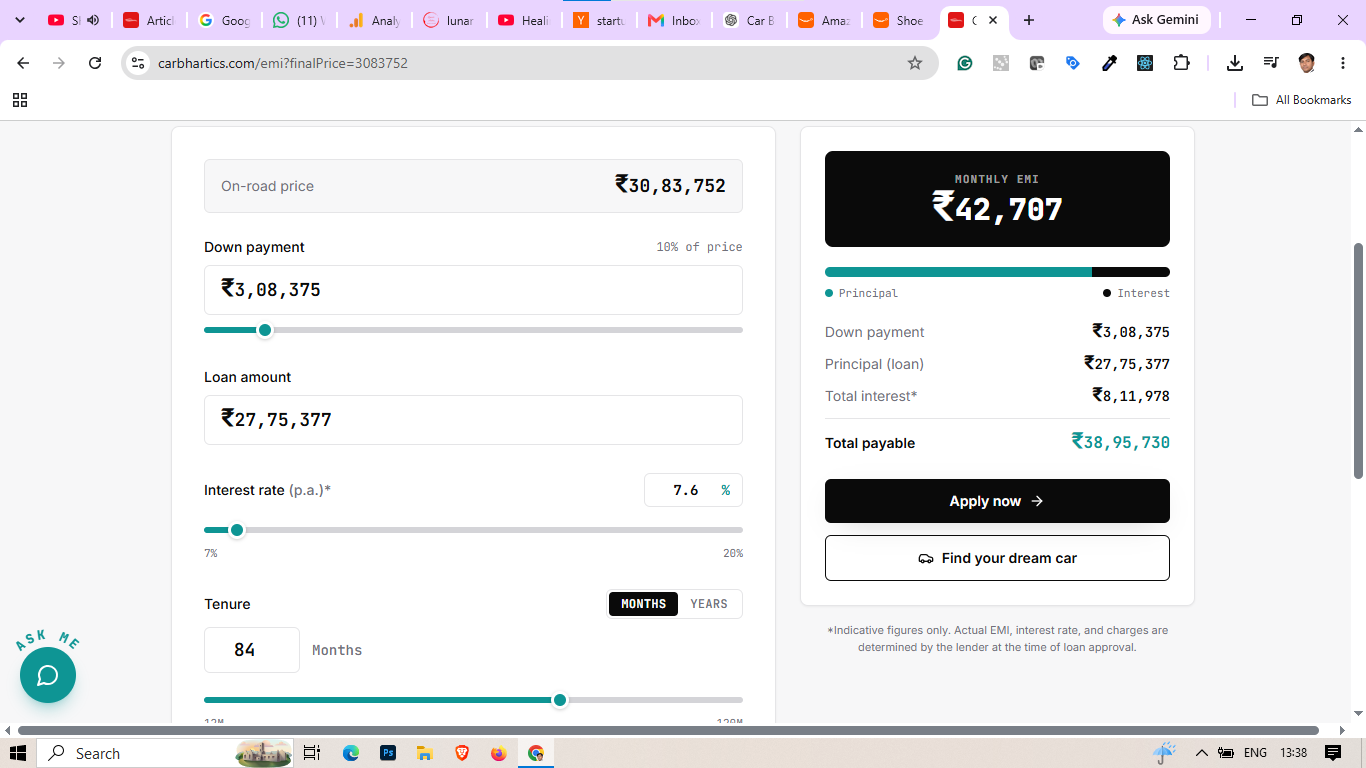
Many buyers focus on EMI rather than total payment.
This can be misleading.
For example, extending the loan period may reduce monthly EMI but increase total interest paid.
Before choosing a car loan, compare:
- Interest rate
- Processing fee
- Loan tenure
- Down payment
- Prepayment conditions
- Total interest
- Total repayment amount
Always compare the total cost of the loan, not just the monthly EMI.
How a Bigger Down Payment Can Affect Cost
A larger down payment can reduce the amount borrowed.
That may reduce interest costs.
However, you should not put all your available savings into the car if it leaves you without sufficient emergency funds or liquidity.
The right down payment depends on your financial situation.
Don't Let EMI Decide Your Car
A salesperson may say:
“This car is only ₹X per month.”
But your decision should not be based only on EMI.
Consider the complete cost:
Down payment + EMI + interest + insurance + fuel/electricity + maintenance + taxes + depreciation
This gives a more realistic picture of affordability.
Insurance: How to Save Without Sacrificing Protection
Insurance is one area where buyers should compare options carefully.
Look at the actual coverage rather than simply choosing the cheapest premium.
Important questions include:
- What is the IDV?
- Is zero depreciation included?
- Is engine protection included?
- What is the deductible?
- Is roadside assistance included?
- What is the claim process?
- Which garages are covered?
A good insurance policy should provide appropriate protection for your vehicle and circumstances.
Accessories: Avoid Unnecessary Spending
Dealership accessories can be convenient, but not every accessory is necessary.
Before accepting an accessory package, ask:
Is it essential?
Is it included in the variant?
Can I buy it later?
Can I get it cheaper elsewhere?
Prioritize useful items over cosmetic additions that significantly increase the purchase price.
Extended Warranty and Service Packages
Extended warranty and maintenance packages can provide peace of mind, but they should be evaluated based on:
- Price
- Coverage
- Duration
- Mileage limit
- Exclusions
- Transferability
- Manufacturer terms
Do not purchase a package simply because it is offered during delivery.
Understand what you are buying.
Don't Forget Maintenance Costs
Two cars with similar purchase prices can have very different maintenance costs.
Before buying, research:
- Scheduled service intervals
- Typical service costs
- Consumables
- Tyre costs
- Battery replacement
- Insurance premiums
- Common repairs
A slightly more expensive car may be cheaper to own over several years.
Resale Value Matters
Cars are depreciating assets.
Resale value can therefore have a major impact on your total ownership cost.
Models with strong demand may retain value better than others.
Consider:
- Brand reputation
- Model popularity
- Fuel type
- Vehicle condition
- Service history
- Mileage
- Market demand
If you plan to sell the car after three to five years, resale value deserves attention before purchase.
How to Calculate Your Real Cost of Ownership
A simple way to think about total ownership cost is:
Purchase Price − Resale Value + Financing Cost + Fuel/Energy Cost + Insurance + Maintenance + Taxes and Other Costs
This gives you a broader picture than the purchase price alone.
For example, a vehicle that costs ₹12 lakh but retains ₹7 lakh after five years may have a different effective cost than a ₹10 lakh vehicle that is worth only ₹4 lakh after the same period.
Buying a Car Online
Digital platforms are changing how consumers research and purchase cars.
Customers can now:
- Research models
- Compare variants
- Check prices
- Calculate EMI
- Compare features
- Estimate on-road prices
- Explore exchange options
- Request assistance
Online research can save significant time.
However, buyers should always verify final pricing, availability, applicable offers, and terms before making payment.
Why CarBhartics Can Be Useful for Modern Car Buyers
The traditional car-buying process can involve multiple phone calls, dealership visits, negotiations, quotations, insurance discussions, financing conversations, and exchange evaluations.
CarBhartics aims to make this process more convenient by bringing important parts of the buying journey into a technology-driven platform.
The idea is simple:
Research smarter. Compare better. Buy with confidence.
Buying Your First Car?
First-time buyers often make decisions emotionally.
There is nothing wrong with being excited about your first car.
But before booking, consider:
- Your budget
- Monthly running
- Parking
- Insurance
- Safety
- Fuel costs
- Maintenance
- Resale
- Financing
- Intended usage
Your first car should fit your lifestyle—not just your wishlist.
Buying a Family Car?
Family buyers may prioritize:
- Safety
- Rear-seat comfort
- Boot space
- Ease of entry
- Air conditioning
- Reliability
- Service network
- Fuel economy
A car that looks impressive in a showroom may not necessarily be the most practical family choice.
Think about how the vehicle will actually be used.
Buying an SUV?
SUVs have become extremely popular in India.
Before choosing one, consider whether you genuinely need the additional size and capability.
Think about:
- City driving
- Parking
- Ground clearance
- Highway usage
- Fuel economy
- Rear-seat space
- Boot space
- Maintenance
If most of your driving happens inside a city, a smaller vehicle may sometimes be more practical.
Buying an Electric Car?
Electric cars can offer an attractive ownership proposition for certain users.
Before purchasing, calculate:
Daily distance × electricity cost × charging availability × vehicle efficiency
Also consider whether you can charge conveniently at home or work.
The best EV for one customer may not be the best EV for another.
How to Compare Two Cars Properly
When comparing two cars, create a simple checklist.
Compare:
| Category | Car A | Car B |
|---|---|---|
| Final Price | ||
| Engine/Powertrain | ||
| Mileage/Range | ||
| Safety | ||
| Features | ||
| Space | ||
| Maintenance | ||
| Warranty | ||
| Resale | ||
| Financing |
This prevents emotional decision-making.
Don't Compare Only Ex-Showroom Prices
This is especially important when comparing different brands.
A car with a lower ex-showroom price may have a different insurance cost, registration cost, financing package, or equipment level.
Always compare the equivalent final on-road price.
The Importance of a Pre-Delivery Inspection
Before taking delivery of a new car, buyers should carefully inspect the vehicle.
Check:
- Exterior panels
- Paint
- Glass
- Tyres
- Lights
- Interior
- Infotainment
- Air conditioning
- Electrical equipment
- Odometer
- VIN/chassis number
- Manufacturing date
- Documents
A proper pre-delivery inspection can help identify issues before delivery is completed.
Don't Rush the Booking
Sales teams may sometimes create urgency around offers or inventory.
Before paying a booking amount, make sure you understand:
- Cancellation terms
- Refund conditions
- Variant
- Colour
- Price
- Discount
- Delivery timeline
- Applicable offers
Read the terms carefully.
Beware of “Limited-Time” Pressure
Some offers may genuinely have deadlines.
However, customers should still take enough time to understand the transaction.
A good deal is not useful if you buy the wrong vehicle.
Take a step back and ask:
Would I still want this car if the discount disappeared?
If the answer is no, reconsider the purchase.
How CarBhartics Can Make the Process Easier
CarBhartics aims to provide customers with a more convenient way to research and purchase cars.
Instead of treating the buying process as simply a transaction, the goal is to support the customer through the journey.
From selecting the right vehicle to understanding pricing and getting purchase assistance, the focus remains on delivering value.
Best Price Doesn't Mean Compromising on Service
A cheap purchase can become expensive if the buying experience is poor.
Customers should consider:
- Dealer reputation
- Service support
- Communication
- Delivery experience
- Warranty support
- Documentation
- After-sales assistance
Price is important.
But confidence and convenience also have value.
The Smart Car-Buying Formula
A practical approach is:
1. Define your budget
Know the maximum amount you are comfortable spending.
2. Define your requirements
Decide what you actually need.
3. Shortlist vehicles
Choose two to four suitable models.
4. Compare variants
Select the variant offering the right combination of features and price.
5. Compare quotations
Obtain complete on-road prices.
6. Negotiate
Ask for the best final price.
7. Evaluate exchange
If you have an existing vehicle, compare multiple valuations.
8. Compare financing
Look at total repayment, not only EMI.
9. Verify insurance
Check coverage and premium.
10. Inspect before delivery
Perform a proper pre-delivery inspection.
11. Complete documentation
Verify all documents before taking delivery.
Questions to Ask Before Buying a Car
Before booking, ask:
What is the final on-road price?
What discounts are currently applicable?
Are there any exchange benefits?
Is the insurance price negotiable?
Are accessories optional?
What is the manufacturing month and year?
What is the expected delivery date?
What are the cancellation terms?
What warranty is included?
What will the approximate maintenance cost be?
What is the expected resale value?
These questions can save you from unnecessary expenses.
How to Get the Best Deal on a Premium Car
Premium vehicles involve larger financial commitments, so even a small percentage difference can represent significant money.
For example, on a ₹30 lakh vehicle, a 2% difference represents ₹60,000.
Therefore, premium-car buyers should carefully negotiate:
- Vehicle discount
- Exchange value
- Insurance
- Accessories
- Finance
- Service packages
- Extended warranty
The higher the vehicle price, the more important detailed negotiation becomes.
How Businesses and Professionals Can Buy Smarter
For entrepreneurs and professionals, time has value.
Spending hours visiting multiple dealerships may not be efficient.
A technology-driven buying process can help reduce the time required for:
- Research
- Comparison
- Price discovery
- Dealership communication
- Documentation coordination
The objective is not simply to save money.
It is also to save time and effort.
Why Price Transparency Builds Trust
Car buying has historically involved complex negotiations.
Modern customers increasingly expect transparent information.
They want to know:
What is the price?
What is the discount?
What am I paying for?
What is optional?
What is the final amount?
A transparent approach helps customers make decisions with confidence.
CarBhartics: Helping You Buy Better
CarBhartics is built around a simple customer-first philosophy:
The customer should know what they are buying, why they are buying it, and how much they are paying.
Whether you are looking for your first hatchback, a family SUV, a premium vehicle, or an electric car, the goal is to make your buying journey more informed and convenient.
Instead of spending your time searching through countless websites and negotiating blindly, you can use a structured process to make a better decision.
What Makes a Great Car Deal?
A great car deal can be summarized in five points:
1. Right Car
The vehicle should suit your actual requirements.
2. Right Variant
You should pay for features that provide genuine value.
3. Right Price
The final transaction should be competitive.
4. Right Financing
The loan should have reasonable overall costs.
5. Right Ownership Cost
Fuel, insurance, maintenance, and depreciation should fit your budget.
When these five elements come together, you have more than a discount.
You have a smart car purchase.
Your Next Car Should Be a Smart Decision
Buying a car should be exciting.
But excitement should be combined with research.
Do not buy simply because a salesperson says it is the best deal.
Do not choose a vehicle simply because it has the biggest discount.
Do not judge affordability only by EMI.
Do not ignore insurance, maintenance, resale, or safety.
Instead, evaluate the complete picture.
Research the car.
Compare variants.
Compare prices.
Negotiate the final amount.
Evaluate your exchange vehicle.
Review financing.
Check insurance.
Inspect the vehicle before delivery.
Then make your decision.
Why Choose CarBhartics?
CarBhartics is focused on making car buying more convenient, transparent, and technology-driven.
The platform aims to help customers find better deals while reducing the complexity involved in purchasing a vehicle.
Our approach is centered around:
Better Research
Understand the car before you buy.
Better Comparison
Compare models, variants, prices, and ownership factors.
Better Deals
Look for competitive pricing and applicable offers.
Better Exchange
Help customers understand the value of their existing vehicle.
Better Convenience
Reduce unnecessary effort during the buying process.
Better Confidence
Make the purchase decision with clearer information.
Frequently Asked Questions
How can I get a car at the best price?
Research the market, compare multiple quotations, understand discounts, negotiate the final on-road price, compare insurance, and evaluate exchange offers.
Is the biggest discount always the best deal?
No. The final payable amount and overall ownership cost are more important than the advertised discount.
Should I compare multiple dealerships?
Yes. Comparing quotations can help you understand the market and identify better offers.
Can I negotiate the on-road price?
You can ask the dealership for its best final price and compare the complete quotation with other offers.
Can my old car help me get a better deal?
Yes. A competitive exchange valuation can significantly reduce the effective cost of your new vehicle.
Should I buy insurance from the dealer?
You should compare coverage and pricing before making a decision. The cheapest premium is not necessarily the best policy.
Is buying at the end of the month better?
Sometimes dealerships may have additional incentives depending on inventory and sales targets, but there is no guarantee. Always compare the actual final price.
Should I buy a previous-year car for a discount?
It can make sense if the discount appropriately compensates for the vehicle's age and potential resale impact. Check the manufacturing date and other details carefully.
How do I know whether a car is affordable?
Look beyond EMI. Consider the down payment, loan interest, insurance, fuel or charging, maintenance, taxes, and expected depreciation.
Is the cheapest car the best car?
Not necessarily. The best car is the one that provides the right balance of price, safety, features, reliability, running costs, and resale value for your requirements.
Final Thoughts: Buy the Car, Not Just the Discount
A car is more than a price tag.
It becomes part of your daily life.
You drive it to work, take your family on trips, travel on highways, manage city traffic, and depend on it for years.
That is why the goal should not simply be:
“Buy a car at the lowest price.”
The smarter goal is:
“Buy the right car at the best possible overall value.”
At CarBhartics, the vision is to make that process easier.
From discovering the right vehicle to comparing prices, understanding offers, evaluating exchange opportunities, and coordinating the purchase, CarBhartics aims to put the customer at the center of the car-buying journey.
So, before you book your next car, do your research, compare your options, understand the complete cost, and negotiate intelligently.
Because when you buy smarter, you don't just save money.
You buy with confidence.
Find Your Car at the Best Price with CarBhartics
Explore cars, compare your options, and get assistance with your next car purchase at CarBhartics.com.
CarBhartics — Your smarter way to buy a car.