
Citroën EV Cars in India: A Complete Guide to the Brand’s Electric Future
Citroën EV Cars in India: A Complete Guide to the Brand’s Electric Future
Aratrika Roy
·Updated ·5 min read
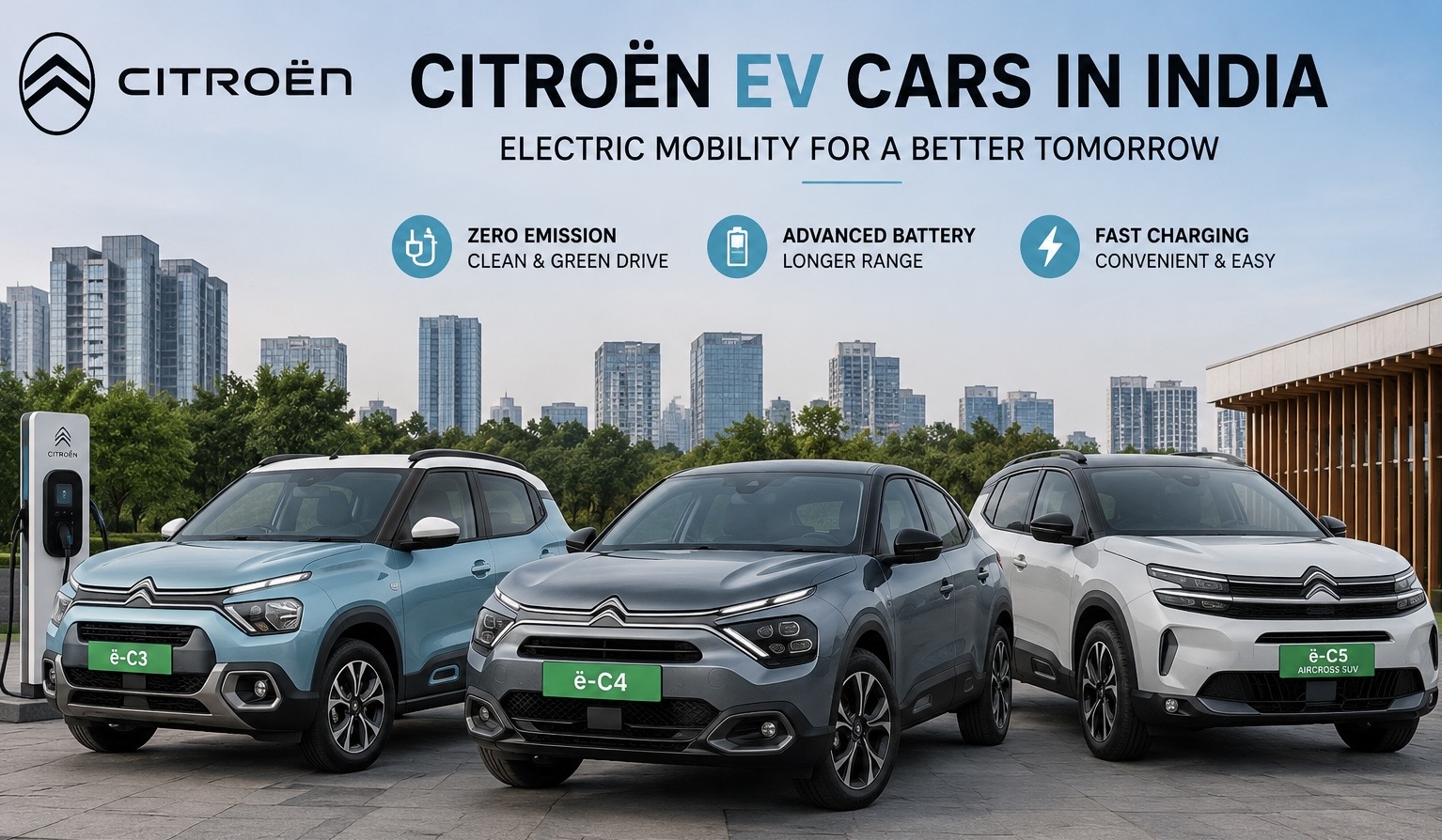
Citroën EV Cars in India: A Complete Guide to the Brand’s Electric Future
The Indian electric vehicle (EV) market has witnessed remarkable growth over the past few years, with both established and emerging automobile manufacturers introducing innovative electric models to cater to environmentally conscious buyers. Among the global brands expanding their electric mobility ambitions is Citroën, the French automaker known for its distinctive design philosophy, comfortable ride quality, and practical engineering. While Citroën entered the Indian market relatively recently, the company has already established itself with models such as the C3, Basalt, and Aircross. As India accelerates its transition towards sustainable mobility, Citroën is also preparing to strengthen its presence in the electric vehicle segment.
Citroën’s global strategy revolves around making electric mobility accessible, stylish, and practical. Rather than focusing only on premium electric cars, the company aims to develop vehicles that combine affordability with modern technology and everyday usability. This philosophy aligns well with the Indian market, where buyers increasingly seek electric vehicles that offer good range, low running costs, and reliable performance without compromising comfort.
The first major step in Citroën’s Indian EV journey came with the launch of the ë-C3, the company’s first fully electric passenger car for the country. Based on the popular C3 hatchback, the ë-C3 retains the same youthful styling while replacing the petrol powertrain with a fully electric drivetrain. The front fascia, compact dimensions, and crossover-inspired stance remain familiar, making it an attractive choice for urban buyers looking for a practical electric hatchback.
Powering the Citroën ë-C3 is a 29.2 kWh lithium-ion battery pack paired with an electric motor producing approximately 57 PS and 143 Nm of torque. The instant torque delivery ensures smooth acceleration, making city driving effortless and enjoyable. According to ARAI certification, the ë-C3 offers a driving range of up to 320 km on a full charge, although real-world figures generally vary depending on driving conditions, traffic, weather, and driving style.
Charging convenience is another strong point of the ë-C3. Using a DC fast charger, the battery can be charged from 10% to 80% in less than one hour under ideal conditions. For home charging, Citroën provides an AC charger that allows overnight charging, enabling owners to begin each day with a fully charged battery. This flexibility makes the car suitable for daily commuting as well as occasional longer journeys.
Inside the cabin, the ë-C3 features a spacious interior with comfortable seating, a modern dashboard layout, and a large touchscreen infotainment system supporting wireless smartphone connectivity. The digital instrument cluster provides battery status, range information, and energy consumption details, helping drivers monitor vehicle performance efficiently. Practical storage spaces, generous headroom, and a comfortable ride further enhance its appeal as a family-friendly electric hatchback.
Safety remains an important aspect of Citroën’s electric offerings. Depending on the variant, the ë-C3 includes features such as dual airbags, ABS with EBD, reverse parking sensors, hill-hold assist, seatbelt reminders, and electronic stability-related systems. While buyers looking for advanced driver assistance systems may find limited options, the vehicle focuses on providing essential safety equipment within its price segment.
One of the biggest advantages of owning a Citroën EV is the significantly lower running cost compared to conventional petrol or diesel cars. Electricity generally costs much less than fuel, while electric motors have fewer moving parts, reducing routine maintenance requirements. Owners also benefit from quieter operation, smoother acceleration, and zero tailpipe emissions, contributing to cleaner urban environments.
Citroën has also been investing in after-sales support and charging infrastructure partnerships in India. Customers purchasing an electric vehicle receive assistance with home charger installation, warranty coverage for the battery pack, roadside assistance, and service support through the company’s dealership network. As India’s charging infrastructure continues to expand, owning an electric vehicle is becoming increasingly practical for both urban and semi-urban customers.
Globally, Citroën offers several electric models beyond the ë-C3, including the ë-C4, ë-Berlingo, ë-SpaceTourer, and electric commercial vehicles. Although these models are not officially available in India at present, they demonstrate the company’s commitment to electrification. Industry observers expect Citroën to gradually introduce more electric SUVs and crossovers in India as demand increases and charging infrastructure becomes more widespread.
The Indian government’s continued support for electric mobility through incentives, expanding charging networks, and greater consumer awareness creates favourable conditions for manufacturers like Citroën. Rising fuel prices and growing environmental concerns are also encouraging more buyers to consider electric vehicles as practical alternatives for daily transportation.
For customers seeking a stylish, comfortable, and easy-to-drive electric hatchback, the Citroën ë-C3 presents a compelling option. Its combination of practical driving range, comfortable ride quality, affordable ownership costs, and distinctive French design helps it stand out in India’s competitive EV market. While competition from manufacturers such as Tata Motors, MG, Mahindra, and Hyundai remains strong, Citroën’s focus on comfort and simplicity gives it a unique identity.
Looking ahead, Citroën’s electric future in India appears promising. As battery technology improves, charging infrastructure expands, and consumer confidence in EVs continues to grow, the company is expected to broaden its electric portfolio with newer models offering longer driving ranges, advanced technology, and enhanced safety features. By combining global expertise with products tailored for Indian customers, Citroën aims to become an important contributor to the country’s transition toward sustainable and environmentally friendly mobility.
In conclusion, Citroën’s electric vehicle strategy reflects its commitment to innovation, comfort, and sustainability. The ë-C3 marks the beginning of the brand’s EV journey in India, offering buyers an attractive blend of modern design, practical range, low operating costs, and everyday usability. As the Indian EV ecosystem matures, Citroën is well-positioned to introduce additional electric models that cater to a wider audience and strengthen its presence in one of the world’s fastest-growing electric vehicle markets.